Kedarkantha trek in December, January and February: snow, cold and conditions
By the World of Atara team · 12 years running journeys in the Himalaya and Rajasthan · Updated 22 November 2026
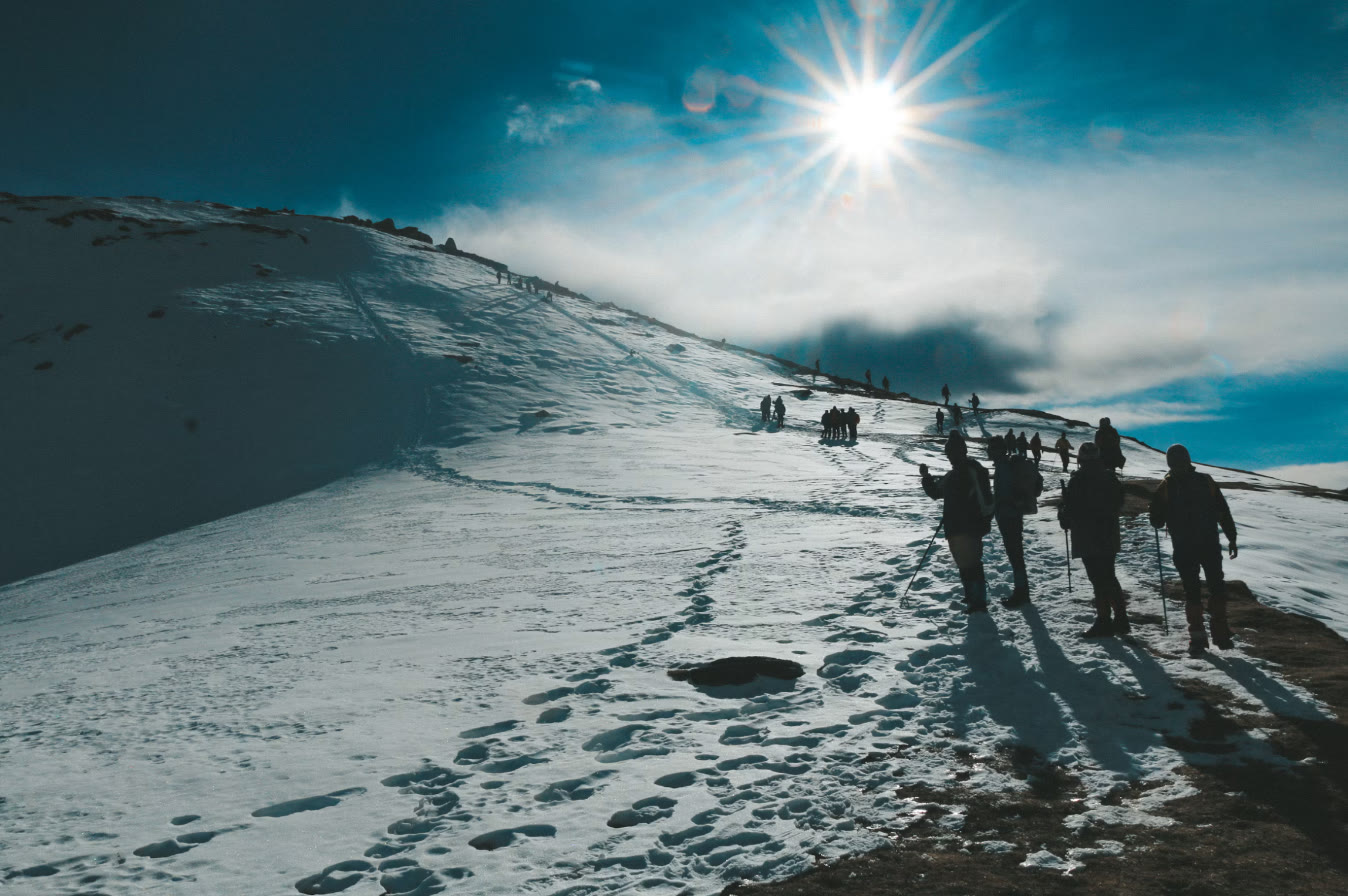
Kedarkantha (3,810 m, about 12,500 ft) is India's best-known winter trek because it gives a real snow summit in just 4 or 5 days from Dehradun. The trek starts at Sankri (1,950 m) in Uttarakhand, inside the Govind wildlife area, and climbs through pine and oak forest to a summit with a 360-degree view of the Garhwal peaks.
The route in short
Day 1: drive from Dehradun to Sankri, roughly 8 to 10 hours on mountain roads. Day 2: forest trail to Juda Ka Talab (about 2,770 m), a small lake that freezes in winter. Day 3: up to the base camp (about 3,430 m) in open meadows. Day 4: an early start, around 2 to 3 AM, to reach the summit (3,810 m) for sunrise, then down to camp. Day 5: back to Sankri and the drive to Dehradun.
December
Snow usually arrives on the upper trail by mid-December and builds through the month. Days are clear and crisp. Night temperatures at base camp are often −5 to −10 °C. Christmas and New Year weeks are the busiest of the season.
January
Peak winter. Snow is deepest and often reaches lower down the trail, sometimes to Juda Ka Talab and beyond. Nights at base camp can drop to −10 °C or lower. Summit day in fresh snow is harder and slower, and fresh snowfall can close the summit for a day.
February
Still plenty of snow, with slightly longer days. Weather can be more changeable, with snowfall spells followed by bright days. A good month for travellers who want snow without the December crowds.
What summit day is like
You start in the dark with a head torch. The final climb is steep and on snow, so microspikes or gaiters are given or rented. The reward is the sunrise over Swargarohini, Bandarpoonch, Kalanag and the Har Ki Dun valley. Leaders turn the group back if weather or snow conditions are unsafe: the summit is a goal, not a guarantee.
What to wear
- Thermals, two fleece layers and a sub-zero down jacket for camp
- Waterproof trekking shoes with ankle support and good grip (not sports shoes)
- Waterproof gloves, a woollen cap, a buff and 3 to 4 pairs of woollen socks
- Sunglasses: snow glare at altitude can burn the eyes
- A 40–60 litre backpack, or offload it to a mule if your trek offers it