Winter Spiti travel guide: roads, cold, stays and what to expect
By the World of Atara team · 12 years running journeys in the Himalaya and Rajasthan · Updated 22 November 2026
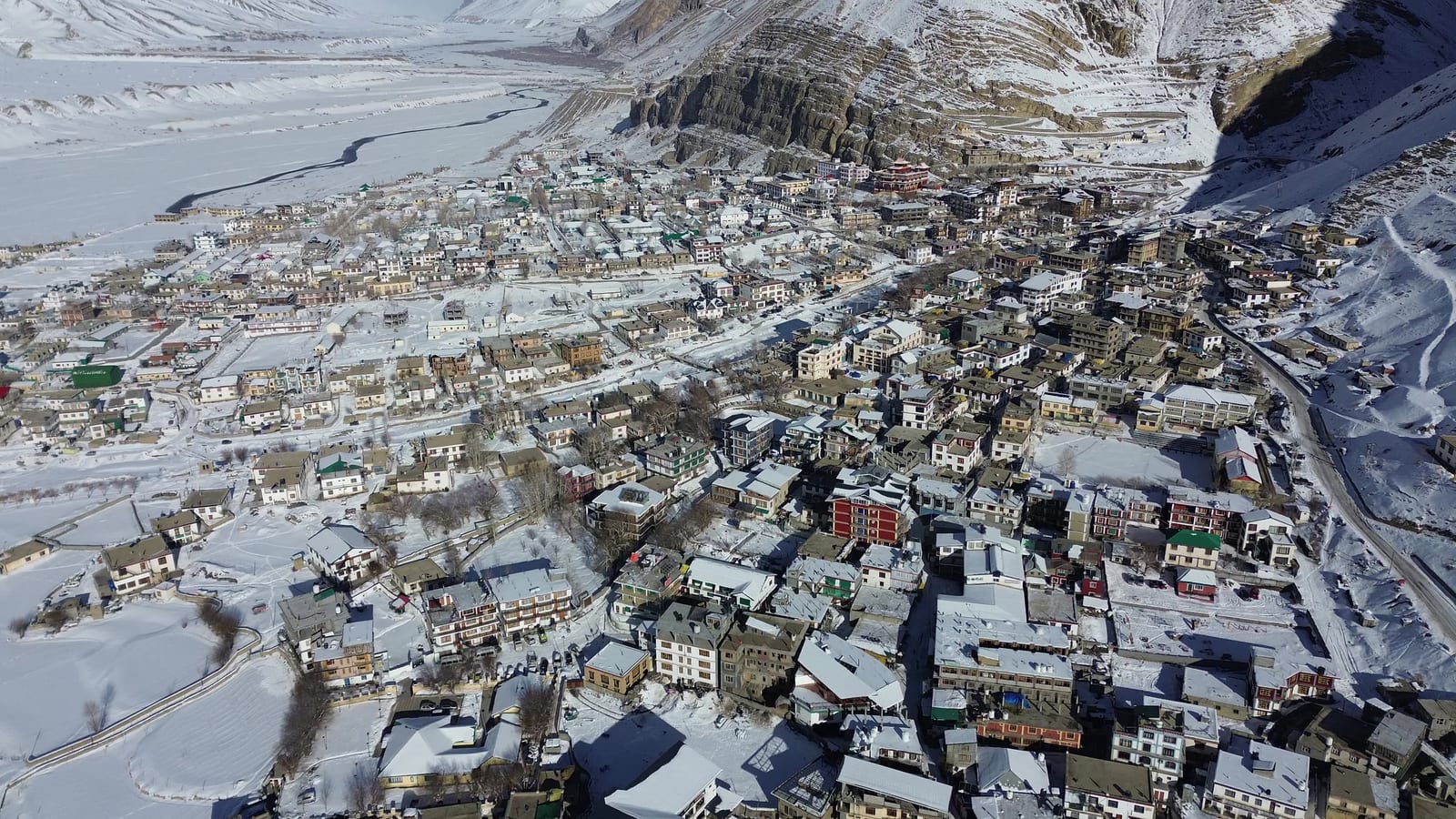
From December to March, Spiti turns into a white, silent valley at minus 10 to minus 20 degrees. Fewer than one in ten summer visitors come in winter, which is exactly why it is special. It is also why you need to plan it differently from a summer trip.
Which road is open in winter
In winter only one road reaches Spiti: from Delhi or Chandigarh up to Shimla, then along the Sutlej through Kinnaur (Rampur, Reckong Peo, Nako) and into Spiti at Sumdo, on to Tabo and Kaza.
The Manali side is not an option. The Atal Tunnel stays open, but Kunzum Pass (4,551 m) between Lahaul and Spiti is closed by snow from around November until the road is cleared in early summer. Chandratal lake is also cut off in winter.
Because the road climbs slowly over two or three days, it also helps your body adjust to the altitude. That is why a sensible winter itinerary is 7 to 8 days from Delhi, not 4 or 5.
How cold it gets
Expect daytime temperatures around or just below zero in Kaza, and nights from minus 10 to minus 20 °C, colder on clear nights in January. Wind makes it feel colder on open roads and passes.
The Spiti river freezes at the edges, waterfalls turn to ice, and village roads can be icy in the morning. Sunny days are common and the sun is strong at altitude, so sunglasses and sunscreen matter as much as down jackets.
What winter stays are like
Most hotels and homestays above Kinnaur switch to winter mode. Water pipes can freeze, so hot water often comes in buckets rather than from a tap. Rooms are kept warm with electric blankets, heat towers or a bukhari (a wood or kerosene stove), usually in the evening.
Power cuts happen, so a power bank helps. Toilets in some high villages are traditional dry toilets. None of this is a problem if you know before you go; it is part of the experience.
Vehicles and safety
Experienced operators use drivers who know winter roads, carry snow chains, and plan the day so the group is off the roads before dark, when black ice forms.
On every Atara winter departure, vehicles carry oxygen, leaders check guests with an oximeter at altitude, and a 4x4 ground team supports the route. If the authorities or BRO close a section because of snow, the leader changes the plan for safety.
What you will see
Tabo Monastery, more than 1,000 years old. Dhankar Monastery on its cliff. Key Monastery above the frozen river. The high villages: Hikkim with one of the highest post offices in the world, Komic at about 4,587 m, and Langza with its giant Buddha. Chicham Bridge over its deep gorge.
Winter is also the season when snow leopards come lower, and local trackers around Kibber run sighting trips. Sightings are never guaranteed.
Phone, cash and permits
Jio and BSNL work in Kaza and Tabo; signal is patchy or absent in the high villages and on parts of the Kinnaur road. Carry cash: ATMs exist in Reckong Peo and Kaza but can run out or go offline.
Indian travellers do not need a permit. Foreign nationals need an Inner Line Permit for the stretch near the border between Kinnaur and Spiti; your operator can arrange it.