Kedarkantha Winter Trek
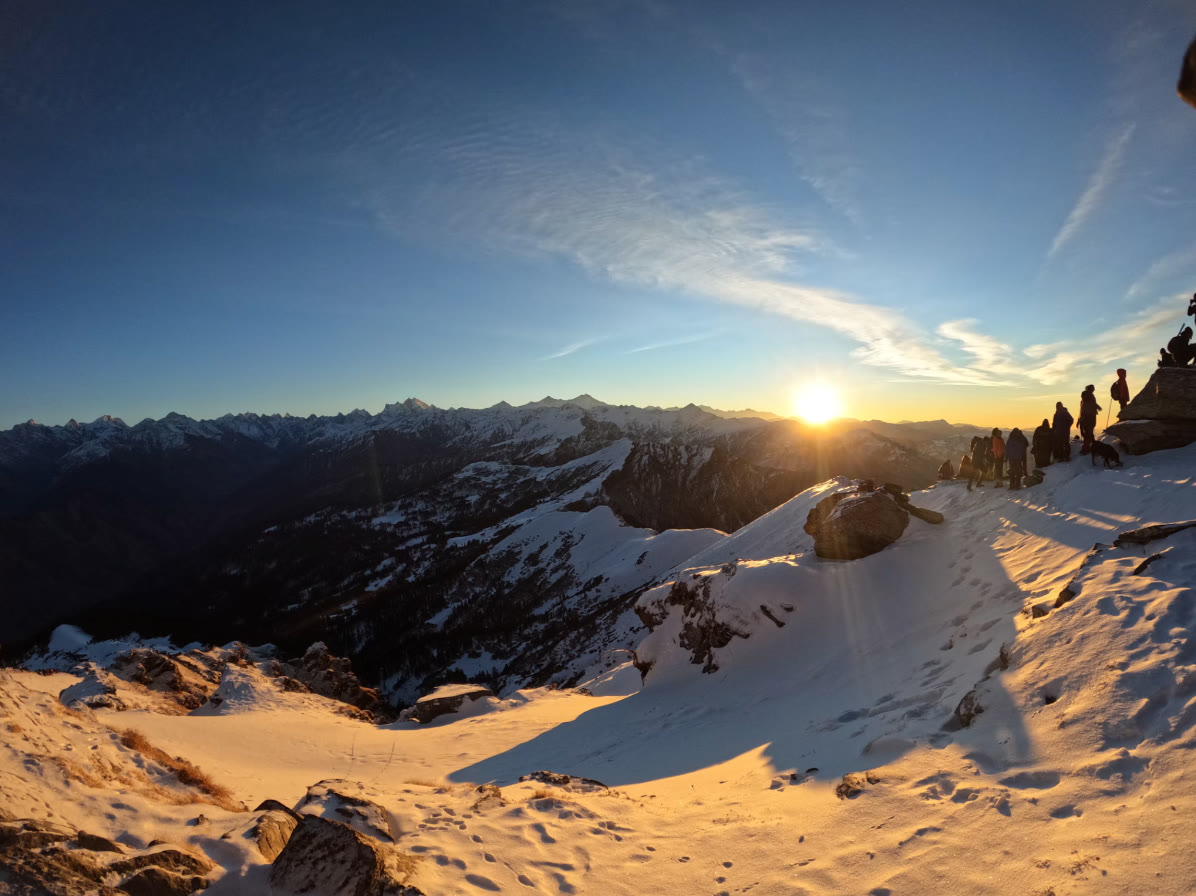
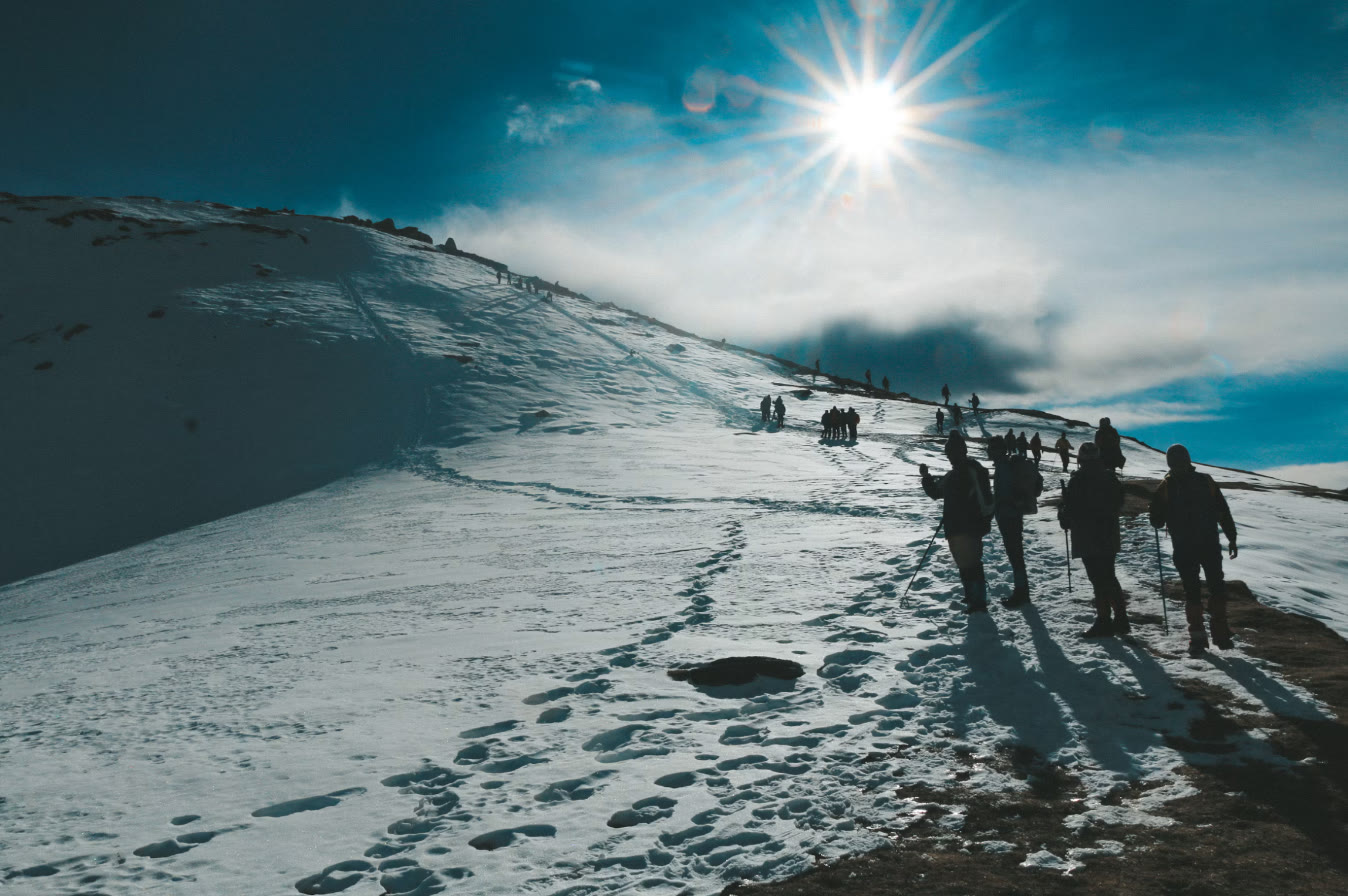
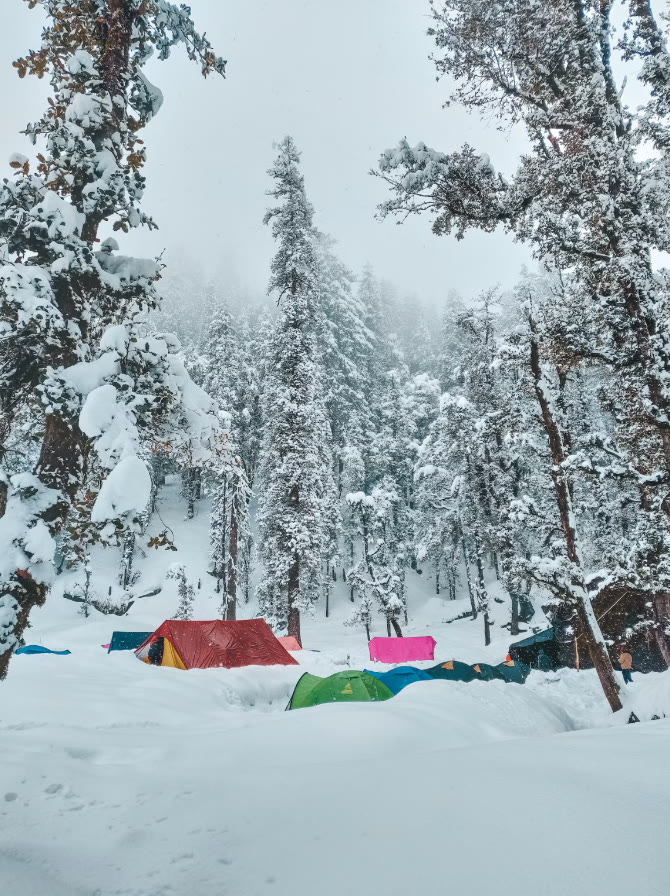
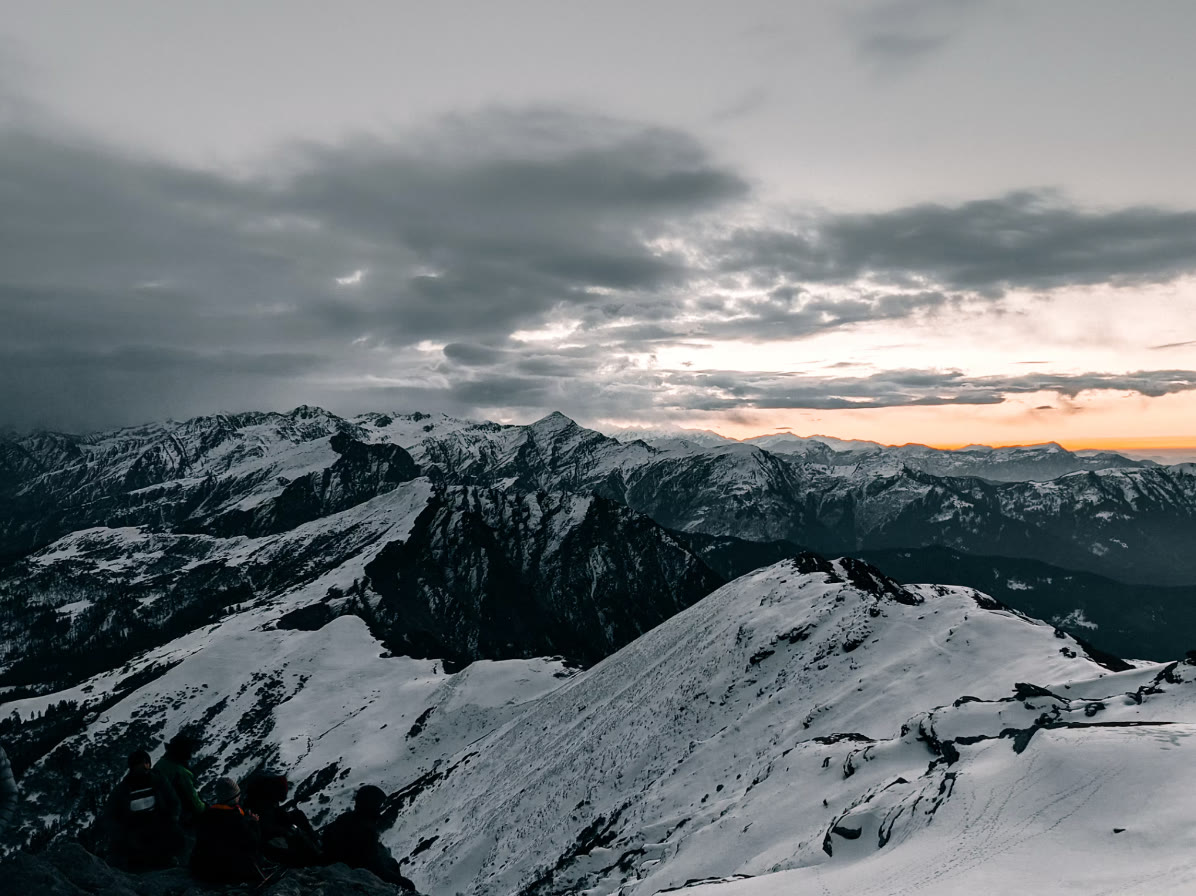
Climb through pine, maple and oak forest to a frozen lake, camp on snow meadows, and reach the 12,500 ft summit at sunrise over the Garhwal Himalaya. A new batch leaves Dehradun every day from 1 December, so you pick the date that suits you.
Altitude, day by day
Where you sleep each night, in metres above sea level. Summit day climbs from base camp and comes back down to the lake.
Day by day
Included
- Homestay in Sankri, then 3 nights in alpine tents with sleeping bags (triple sharing)
- Vegetarian meals, Day 1 dinner to Day 5 breakfast, plus tea and snacks
- Shared transfers Dehradun – Sankri – Dehradun
- WFR / WAFA certified trek leaders and local guides
- Forest permits, entry and camping fees
- First-aid kit, pulse oximeter, emergency oxygen; microspikes and gaiters when needed
Not included
- Meals on the drive days and Day 5 lunch
- Backpack offloading (available as an add-on)
- Personal gear and rentals
- Travel insurance and evacuation
- Bottled water, hot water buckets, tips, charging
Add-ons at Sankri
Offloaded bags up to 10–12 kg, rucksacks with rain covers only.
Good to know
How fit do I need to be?
Kedarkantha is a moderate winter trek to 12,500 ft. You need basic cardio fitness, and must declare conditions such as asthma, heart problems or high blood pressure before departure.
When should I book my train or flight home?
We reach Dehradun between 8 and 9 PM on Day 5. Mountain roads can delay us, so book departures after 11 PM or the next morning.
What if the weather turns?
The trek lead may change the route, camp or turn back in blizzards or blocked trails. Weather changes are not refundable.
Trek rules
No smoking, alcohol or substances on trek days. We follow Leave No Trace: carry back every wrapper and wipe.
More questions about Kedarkantha
Is Kedarkantha good for beginners?
Yes. It is one of the most popular first Himalayan treks: four nights, well-marked trails and a real snow summit. You need basic fitness to walk 5 to 7 km uphill a day for three days.
How high is the Kedarkantha summit?
About 3,810 m, or roughly 12,500 ft. The trek starts at Sankri (1,950 m) and camps at Juda Ka Talab (2,770 m) and base camp (3,430 m).
Will there be snow?
Snow usually reaches the upper trail by mid-December and is deepest in January. February still has good snow with slightly longer days.
How cold does it get at camp?
Nights at base camp are usually −5 °C to −10 °C, and can go lower in January.
How long is the drive from Dehradun to Sankri?
About 8 to 10 hours on mountain roads, on day 1 and again on day 5.
What time does summit day start?
Around 2 to 3 AM, to reach the top for sunrise and come down before the weather changes.
What shoes do I need?
Waterproof trekking shoes with ankle support and deep grip, worn in before the trek. Sports shoes are not safe on snow.
Is the summit guaranteed?
No. Fresh snow, wind or poor visibility can make it unsafe, and the trek leader decides on the day.